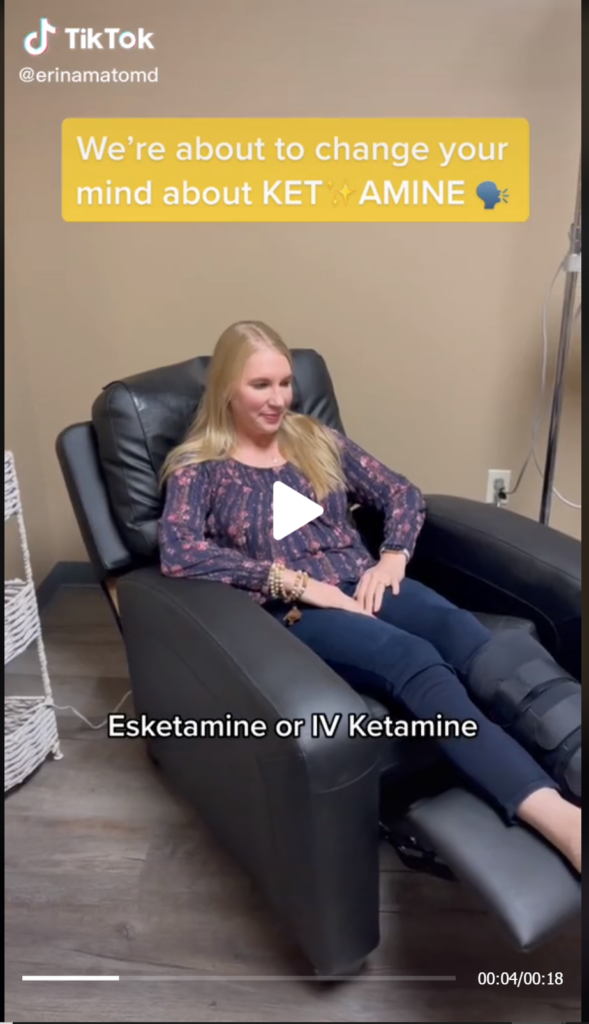
As a drug used for years in the medical field to help with pain relief and anesthesia, Ketamine has become an “innovative” treatment in the mental health setting. If you’re like many people left feeling discouraged, hopeless, and stuck with antidepressant medications, the thought of this might still make you feel as nervous as you are intrigued. Ketamine might lack the familiarity and advanced years of traditional treatments, but that’s because Ketamine has been advanced from the start. Whenever you see the words innovative and Ketamine in the same sentence, remember that it’s not just making headlines because it’s “new.” Together, we will break down the benefits and process of IV Ketamine treatment so you can get familiar with Ketamine and see why it isn’t as scary as it sounds.
See my TikToc link by clicking here.
What is Ketamine?
Ketamine is a drug that has been used for decades in the medical field as an anesthetic for pain relief. In recent years, it has become an innovative treatment option in the mental health setting to help those struggling with depression and PTSD.
How does Ketamine help fight depression and PTSD?
Until recently, treatment options for depression and PTSD were limited and left much to be desired. That is no longer the case, thanks to IV Ketamine therapy. When Ketamine is released into the body, it binds to NMDA receptors found in brain cells that control memory function and increase synaptic plasticity. When bound to a receptor, it inhibits it, blocking it from causing more “background noise” in the brain – noise linked to mood disorders like depression and PTSD. Inhibiting these receptors helps to reverse the damage to synaptic connections. Like a “reset” for the brain, Ketamine improves cognitive function and reduces negative thinking patterns associated with depression and PTSD. This results in an antidepressant effect that is both fast-acting and long-lasting.
How convenient is Ketamine?
Convenience is a multi-part benefit of Ketamine, starting with that it can be administered intravenously (IV), which means it can be given directly into the bloodstream. This makes it a convenient option for those who may not be able to take oral medications or who have difficulty swallowing pills. Ketamine is also a convenient treatment option because it can be given as needed. Unlike other medications that must be taken daily, Ketamine can be administered on an as-needed basis, which means you can have more control over your treatment. The fact that IV Ketamine treatment is highly effective means greater potential for convenience in the future. If you are tired of trying medication after medication, with little to no relief, Ketamine could be the answer you need. Finally, most patients report feeling calm and in control at the end of each IV Ketamine session. With Ketamine’s low chance of side effects, adverse reactions aren’t likely to occur. Once your healthcare provider clears your vitals with 30 minutes of treatment, you are good to go about your day!
What is the process of administering Ketamine Like?
First, a small IV catheter is placed in the patient’s arm. The process of administering IV Ketamine is relaxing and straightforward. Next, the Ketamine is slowly infused into the bloodstream for about 45 minutes. During this time, patients are closely monitored by a clinician who controls the rate at which Ketamine enters your system and ensures you get your complete dosage. For the treatment, patients are encouraged to wear comfortable clothing and do what they’d like to relax, such as listening to calming music or meditating. Patients often report feeling relaxed and comfortable during the infusion; many say they notice an improvement in their mood within a few hours.
If you’re ready to learn more about IV Ketamine treatment, we encourage you to watch the video below from our very own Dr. Amato. In the video, she breaks down the Ketamine treatment process, helping us see that there is more to look forward to than to fear. See my TikToc link by clicking here.
TMS
by Deb (age 64)
Category: generalThe hoops I jumped through in order to be evaluated were straightforward and efficient. I met with PA Kaitlin for about an hour to discuss my history and previous medications. Then Dr. Amato joined us to further discuss my history, the TMS treatment, and answer any questions. Myrna gathered all of the information and submitted it to my health insurance company to request coverage for TMS. Fortunately, insurance approved the treatment and I was able to begin the next week. I’m sure most people have anxiety about starting a treatment like TMS. No matter how many times it’s described to you, there are many unknowns. How will I feel during treatment? Is it painful? What if this doesn’t work? What if it works for a while but then stops? In all honesty, I was very uncomfortable during the first couple of weeks of treatment. The alternating two seconds of tapping sensation caused some pain during treatment, and at the end of the first week I thought about quitting. But I had sworn to myself that TMS was a last resort and I HAD TO complete the treatment and give it a chance to work. My technician, Heather, told me that some people don’t feel the tapping at all, they only hear it. Guess I wasn’t one of those people! But as the days went by, it became easier to tolerate the treatments. During this time I also saw Lauren weekly for CBT (cognitive behavioral therapy). This is highly recommended for people undergoing TMS treatment, and it was a positive complement to my total of 100 minutes each week “under the helmet”. The weekend between weeks three and four, I started to notice subtle improvements in my mood, increased belief in my self-worth, and enthusiasm for simple things like going for walks, meeting friends for lunch, and taking on volunteer work in the community. I hesitated at first to believe that TMS was helping me. I was afraid that I was convincing myself it was working because I so desperately wanted it to! But now that I am past the treatment I can say with cert
TMS
by Barbie (age 68)
Category: generalI feel so blessed to participate in the TMS protocol at MT Psychiatry. After struggling so many years with depression and not getting significant results from medication, particularly of late, I noticed positive results in the first two weeks of treatment. TMS can literally give you back the beauty & joy in living as well as the courage to make positive life changes and improvements in your daily living situation. I heartily encourage anyone to put yourself into the hands of the amazing TMS team who so gently and graciously make this journey with you out of the black hole that is depression. It is my honor and privilege to give the TMS treatment the highest recommendation.
TMS
by Shayne (age 66)
Category: generalI am grateful for the support and caring I have received from Dr. Amato (and Heidi, Heather and Myrna) in my quest for mental health and a fuller more productive life. While the TMS results have been subtle, I feel more positive about my future and I would recommend this team absolutely. Thank you!
TMS
by Carrie (age 65)
Category: generalNot realizing how fuzzy my head was, I thought I was only going through severe anxiety and depression. Through the insight of Pat, I was able to go through TMS treatments which brought down the anxiety and depression immensely and has cleared up the fuzzy, far off substantially. All the personnel treated me with kindness and I’m sure their attitudes helped in my recovery.
TMS
by Bridget (age 47)
Category: generalThe first outcome of TMS I noted happened early in my treatment, at about the beginning of week two. I felt as though my “brain fog” had been chipped away. I wish I could report that I feel my mental health issues are in “remission”, but I can’t do so yet. My hope is that I will see improvement in the weeks to come, now that my TMS cycle has ended. I can say that my brain feels – in some way – different; I can’t explain exactly how. I continue to struggle at this point in time but sill have hope for more improvement.
Powered by Crystal Clear Digital Marketing Reviews


